Graceful #021 - What are peptides, really?
Everyone Is Talking About Peptides. But What Are They?
Peptides used to be the kind of ingredient you might notice in a serum, register for a moment, and then forget. They were a whisper in the world of skincare, a little nod to science that made the product feel serious. And then, rather suddenly, they became impossible to ignore.
They’re not only in serums anymore. They’ve moved into the broader conversation about ageing, performance, recovery and longevity. They’ve entered the kind of wellness dialogue that once felt reserved for a certain kind of person — the people who were tracking sleep before the Oura ring existed, the ones who take “biohacking” seriously, the people already speaking in protocols. Often athletes, celebrities, actors and models; those who are commercially incentivised to stay in prime condition.
Now the conversation (it feels) is everywhere, and I find that fascinating. It feels like a sign of where the wellness world is heading; a move from quick fixes to a deeper curiosity about ageing itself.
Is that a good thing? Can we all take a leaf out of this book? Are we, perhaps, a little bit narcissistic for investing so much energy into how we age, look, and how long we might live? I don’t know. But I’m watching, with interest, and taking notes.
Let’s discuss.
Peptides aren’t just one thing. They’re not a miracle ingredient, and they’re not a single promise. They’re a category — a family of molecules, a kind of signalling language. Deep dive here if you’re interested.
In plain terms, peptides are short chains of amino acids, which are the building blocks of proteins. What makes them feel modern is what they can do, and how broad the category, and therefore possibilities are. They behave a little like messengers: they land on receptors in the body and quietly suggest a response. A nudge to make a cell behave differently, to produce more of something, or to calm a process down. That might mean supporting repair, encouraging firmness, or signalling that it’s time for the body to do what it does best, but has been handicapped by lifestyle or factors beyond our control.
In that way, they feel less like a beauty or wellness trend and more like a subtle way of working with your biology for the better. Maybe that’s why they’re so compelling and illusive: we’re shifting the focus of our attention, and moving from the surface to the source; which is something I can get onboard with.
A Shift:
In recent years, the media discussion around peptides has moved beyond topical skincare and into something more systemic. Injectable peptides, protocols, ‘peptide stacks’. The kind of talk that once lived in biohacking circles has now crossed into mainstream media. There was recently a Harper’s Bazaar piece listing the numbered peptides, which made the shift feel official, like the language has arrived in the public sphere. BPC-157, CJC-1295, GHK-Cu, ipamorelin. Names that sound like a secret code but I predict will soon start to become strangely familiar, like a new kind of wellness alphabet.
The reason this feels significant is not because these likely will start to become more recognisable, and commonly discussed. It’s more that the conversation has become about what people want as they age, not just in terms of how they look, but how they feel. Peptides are not just “skincare ingredients.” They’ve become a way of talking about recovery, resilience, and the body’s natural repair systems; for anyone (wanting to dive down the rabbit hole).
Some people are drawn to peptides for recovery, particularly if they train regularly and want to support tissue repair. With the rise of endurance sports, marathons and cult fitness events like Hyrox (my other half is, unfortunately, a willing participant), it feels like a natural fit, and a huge market opportunity for companies developing these products. Others explore them for sleep and energy, because certain peptides influence hormonal signalling. Some use them for gut support or inflammation, or purely because the idea of working with the body’s messaging systems feels like the right thing to try next.
Peptides are a broad category, and not all of them look like, or do what we typically imagine when we hear that word. GLP-1s, for example, are peptides too. They’re the same family of molecules, just operating in a very different part of the body. Peptides are not one thing; they’re a way of signalling, and the effects depend entirely on the message.
Take ipamorelin as an example. In research and in certain wellness circles, it’s used for its potential to increase muscle, reduce fat, improve sleep and support recovery - dreamy right? But it’s worth noting that ipamorelin is typically sold as a “research peptide” and isn’t an approved drug for human use in most places, which is exactly why it (and many others) sits in a somewhat grey area.

Who’s ‘doing’ peptides:
There are people in the public eye who have been exploring this world for years.
Image courtesy of one of the many social posts promoting biohacking, doing the rounds right now.
Early adopters like Dave Asprey and Bryan Johnson, who have long made longevity a serious conversation and changed the landscape of how we think about ‘self-care’ and health preservation. The fact that they’ve been doing it for so long makes the conversation feel less like a moment and more like a slow cultural shift.
Bryan Johnson, in particular, has spoken openly about his interest in peptides and their role in recovery and performance, describing them as part of a broader strategy to support the body’s systems rather than a quick fix. It’s not the kind of endorsement that feels like a beauty trend, but more a very deliberate, long-term experiment with the biology of ageing that we get to watch, and take notes on from the ring-side.
As he has said, “If you can influence the body’s signalling systems, you can influence the way it ages.” And that is the heart of why peptides feel so compelling and seem to be finding themselves in the morning routines of more and more people. Not because they promise a miracle, but because they offer a new way of engaging with the body’s natural communication and systems that naturally slow down over time.
Topical Peptides:
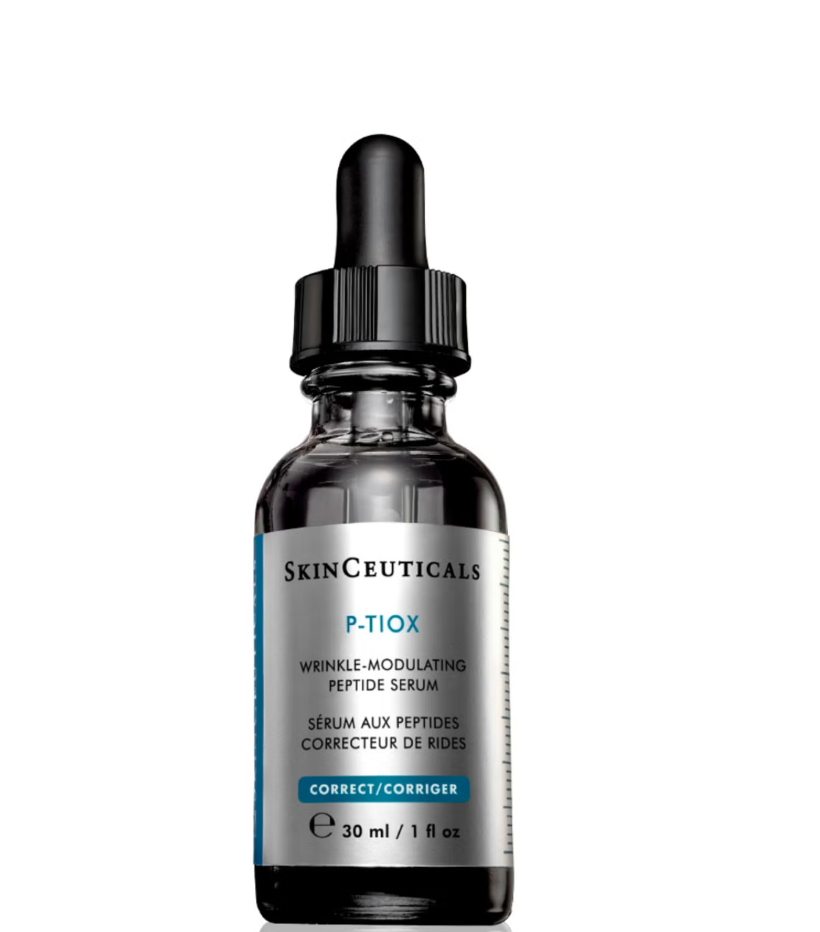
Before we imagine needles and protocols, there is a simpler, gentler place to begin. Topical peptides — the ones you’ll find in serums and moisturisers, the ones that sit comfortably in a routine you already know, the ones highlighted in the Who What Wear round-up of peptide serums I was asked to contribute to. It’s a lovely place to start if you’re curious but not ready to commit to anything dramatic.
Topical peptides don’t feel like such a leap. They feel like a slightly more subtle layer of supporting processes in the skin without the potential risk profile (or needles). They don’t replace the basics; they comfortbly sit alongside hydration, antioxidants, and SPF, offering a gentle boost that feels modern and respectful for most skin types. They’re not promising a radical change, but long term support that offers thoughtful, consistent care for your skin, which is totally up my alley (and I’ve seen amazing results for many of my clients).
Recommendation:
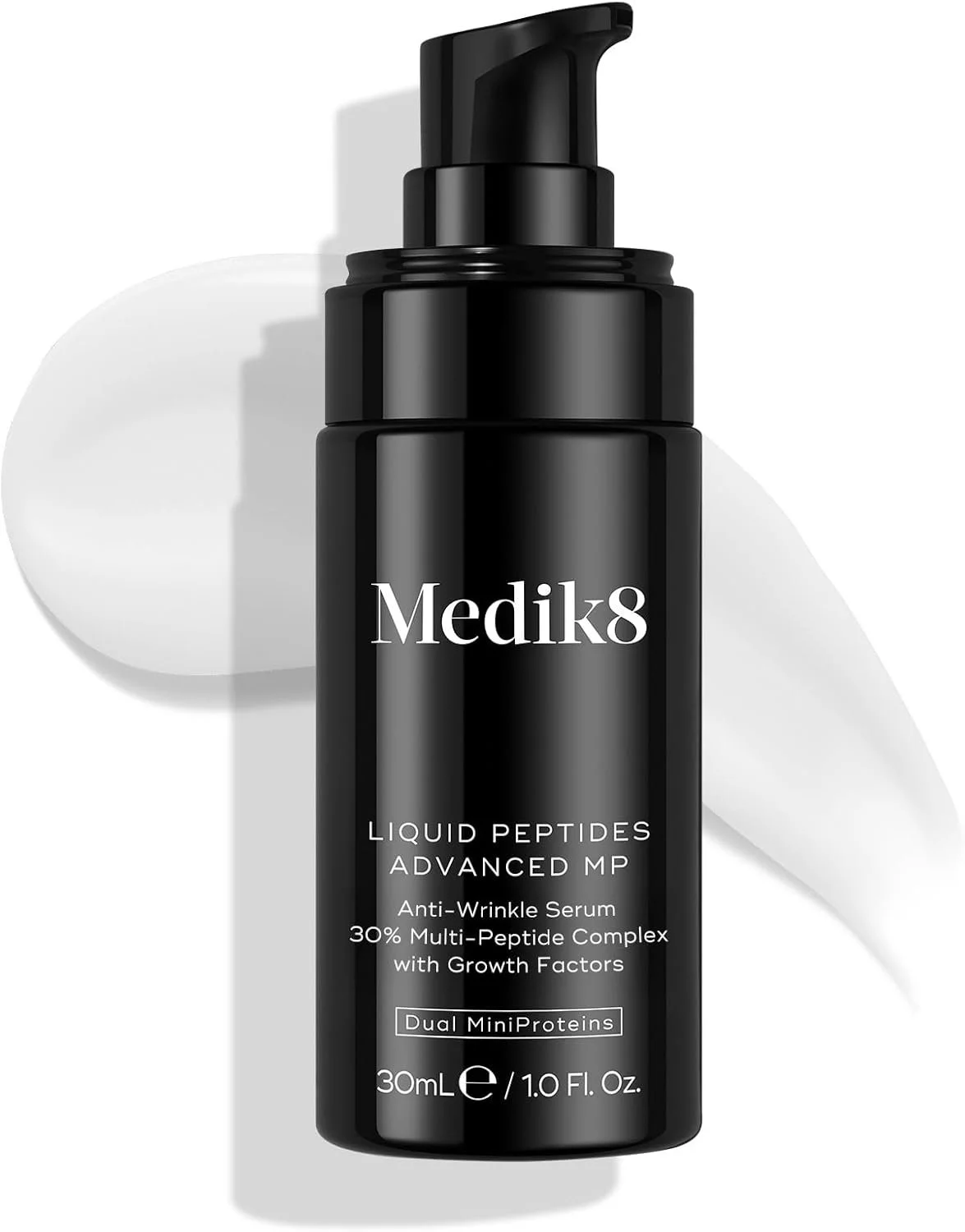
My go-to topical Peptide serum is the Liquid Peptides Advanced MP by Medik8. I’m also excited to try their latest launch, combining Niacinamide + Peptides for calming, reducing blemishes and lowering inflammation in the skin.
If you’re intrigued by peptides, I think that’s a good instinct. They’re fascinating, modern, and they make you think about skin and ageing as part of a larger story. But longevity isn’t a single thing, or a silver bullet and neither are peptides from what I understand. It’s not a secret ingredient or a protocol or a numbered peptide that’s going to largely change your trajectory (but I’m watching the space with interest). Rather, as I’ll continue to suggest; it’s a collection of choices made consistently over time.
Peptides can be part of that conversation, whether in a serum or a deeper protocol, but they’re not the whole story.
From My Desk This Week:
One product I’m loving: I’ve mentioned this a few times recently, but I truly believe cleansing is the cornerstone of a great routine. I’ve written about it before, and I still think it can make or break how your skin feels, no matter what you’re investing in later on. The cleanser sets the tone for everything that follows.
At the moment, I’m loving the iS Clinical Cream Cleanser. It feels nourishing without leaving a heavy residue, and it emulsifies beautifully. It’s a great option for winter when you want to avoid stripping the skin, but it’s also ideal for those of us who are prone to the odd breakout if the wrong product sneaks into the routine, or if we go a little overboard on Ferrero Rochers over Christmas.
What I’m reading/listening to: It would be false to say I’ve been consuming anything other than Beckham drama this week. I’ve just started the episode titled “Brooklyn Beckham Burns It Down” from my guilty pleasure, Shameless Media. They’re the Australian podcast I’ve mentioned before, perfect if you’re feeling a little fatigued by the “throw out all your kitchen pans because you’re poisoning your family” style wellness shows (though, full disclosure, I do have a few pans on my replacement list as the evidence is quite compelling albeit overwhelming). Shameless Media describe themselves as “the pop culture podcast for smart people who love dumb stuff.” It’s brainrot with a cherry on top; sharp, eloquent opinions on celebrities — and I’m fully expecting some delightfully chuckle-worthy commentary on the drama.
In the media: My media consumption has been pretty niche this week, but one thing that keeps popping up across socials and morning routine content is bone broth. I read an article on it recently, and it made me think of my mum — the OG of all things animal-product related, being the daughter of a kiwi farmer. She and my grandmother once told me that crumbed sheep brains were chicken nuggets when I was little. “Devoured them!” she loves to recall. So naturally bone broth has been a post-roast ritual in our family for decades.
I’m a big fan of adding broth to meals, especially soups, but I’m not sure I could get behind bone broth as the first thing I drink in the morning. That said, I completely understand the appeal and the compelling case for it. Vogue has a thoughtful piece on it — food, or bones, for thought.
Small shift to try this week: Despite my admittedly excessive Beckham consumption this week, I’ve been trying to stick to one of my 2026 goals: limit doom-scrolling and reduce my social hours. It’s tricky when social media is part of running a business, but there are undeniably hours spent on the sofa that have nothing to do with work.
Enter the Freedom app — it blocks you out during the hours you choose, and it has genuinely helped me break the habit at certain times of the day. I’d highly recommend it. It’s made a noticeable difference to my sleep, creativity, and even my brain fog.
As always, I hope this helps us all navigate some popularised topics around ageing with intention and ease. I’d love to hear your questions or any topics you’d like me to break down in future newsletters, just reply to this email.
With grace,
Charlie x
PS: Please forward this on to anyone you think might find it insightful. They can sign up here, and read past issues here.