Graceful #017 - Exosomes 101 — Tiny Messengers, Big Promises?
Exosomes are having a moment. They’re the word on every aesthetician’s lips, the new ‘must-have’ in serums, and the latest companion to microneedling; sweeping clinics from Mayfair to Manchester. The promise sounds seductive — cell-to-cell communication for brighter, firmer, more resilient skin; but beneath the excitement sits an important conversation worth having.
Because while exosomes might represent the future of regenerative skincare, they’re also a perfect example of how the beauty industry sometimes runs faster than the science. Let’s discuss:
What are Exosomes?
In short, exosomes are microscopic messengers that cells release to communicate with one another. They carry tiny parcels of information — proteins, lipids, and bits of genetic code — that can influence how nearby cells behave. In medicine, this ability has sparked interest for wound healing and tissue regeneration. They’ve been used as far back as 2005 in lung cancer treatments, and in South Korea dermatology clinics have long used them to support recovery after laser treatments and microneedling.
So it’s not hard to see why skincare and aesthetics have jumped on board in UK (US have yet to get them through FDA). The logic goes: if we can apply or inject these messages directly, perhaps we can instruct our skin to repair itself, boost collagen, or behave more youthfully?
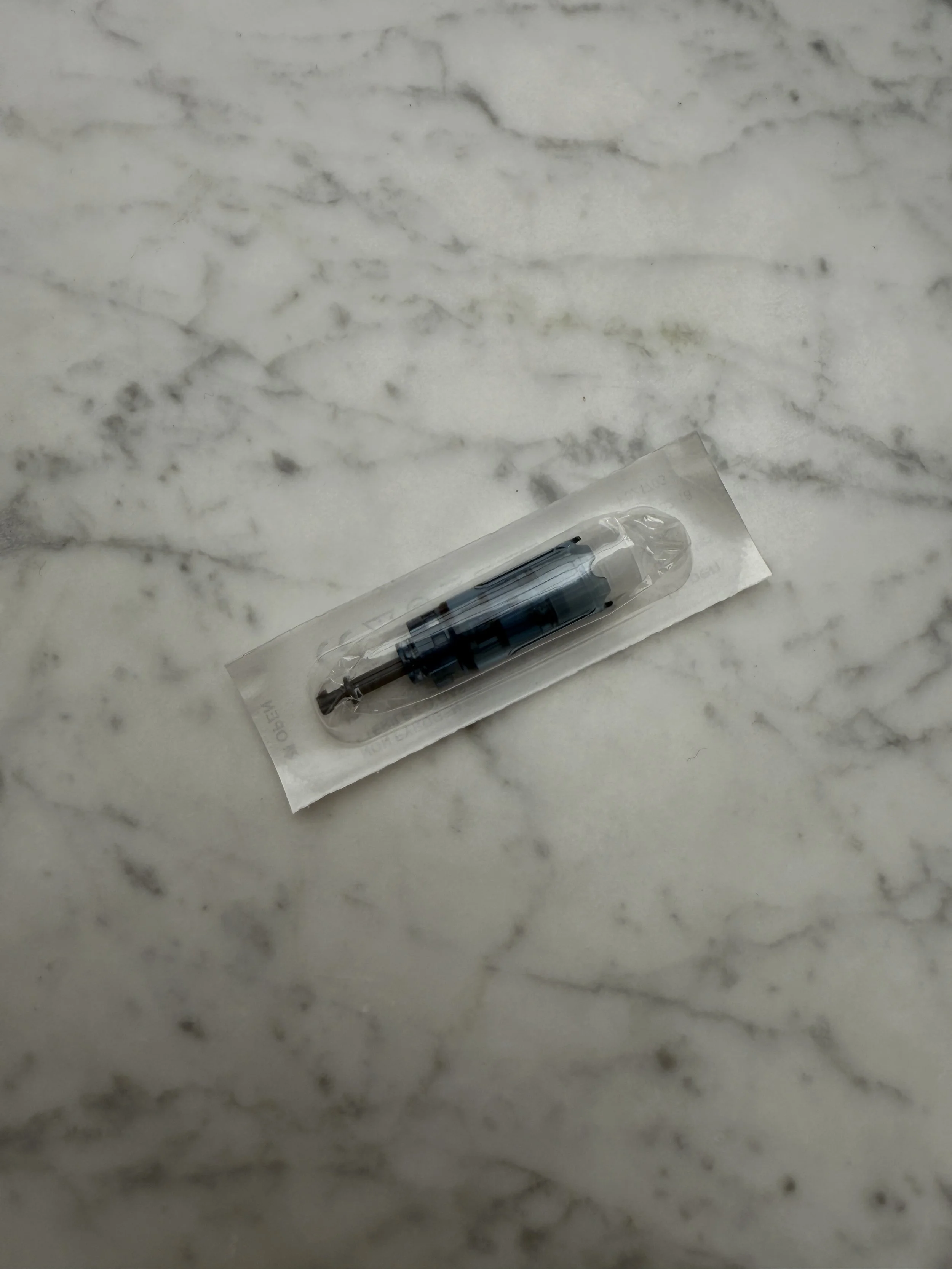
It’s also worth noting that exosomes don’t simply sink into the skin like a regular serum. Their size and biology mean they generally need a delivery method that penetrates deeper layers — such as microneedling, lasers, or other energy-based devices; to reach the cells they’re meant to influence.
Topical application alone is unlikely to get them past the outer barrier, which is why in-clinic treatments often pair exosomes with these techniques. This is also why results can be unpredictable: effectiveness depends not just on the exosomes themselves, but on how they are delivered and whether they survive the journey to the target cells.
Promise vs. Proof
The term exosomes covers a wide range of sources — plant-derived, animal-derived, and human-derived (yes). And not all are created equal. Human-derived versions, for example, have raised serious safety and ethical questions - who (read: who’s umbilical cord) and how are they being sourced. A recent Guardian investigation found UK beauty clinics offering banned exosome treatments made from human cells, prompting warnings from regulators about contamination risks and unproven claims. And when it comes to plant-derived exosomes, the evidence is even thinner: current research suggests they may act more like antioxidants or anti-inflammatory compounds than true cellular messengers, so their effects are likely very different from human- or animal-derived exosomes.
Yet another way marketing allows us to equate trendy ingredients/words with guaranteed results, when in reality the science is still figuring out what’s actually happening at a cellular level.
Even when sourced safely, there are still fundamental questions: How stable are these exosomes once bottled or frozen? Do they survive long enough to do anything useful? And, perhaps most intriguingly, how do we know what messages they’re actually sending?
One expert put it perfectly — “Exosomes are messengers, but we don’t yet know if they’re delivering good news or bad.”
Because if they come from compromised or stressed donor cells, those messages might not be the rejuvenating kind. The biology is complex; these vesicles don’t just whisper “collagen please” — they can also pass along inflammatory or unwanted signals.
Unlike traditional actives, exosomes are not a single molecule with a predictable outcome. They’re carriers — dynamic, coded, and dependent on their source and environment. In research settings, they’re stored under ultra-cold, sterile conditions. In a retail serum, they’re expected to stay stable on a bathroom shelf. Those two realities don’t necessarily align.
This isn’t to dismiss the potential — far from it. The science of cellular communication is fascinating and may well shape the future of skin regeneration. But for now, it’s worth recognising that potential and proven are not the same thing.
Trend Cautions
I’m not about fear-mongering, but being informed matters; staying informed beats jumping on hype if it means you might avoid a bad outcome. The aesthetic world sadly has a long history with treatments that arrive to market before the research/risk profile is ready. Radiofrequency microneedling, for instance — a more invasive, energy-based cousin of standard microneedling — was recently served a safety warning after reports of burns and scarring. I don’t think I will ever get over this post about one women’s life-altering experience with it. It’s a reminder that innovation doesn’t always equal safety, and enthusiasm (and therefore guardrails on training and who can provide these treatments) often outpaces evidence.
The same often applies to supplements and injectables: the body doesn’t take instructions blindly. It uses what it needs, when it needs it, and the rest is chemistry on hold. Sending in signals, whether that’s a collagen powder or exosomes, doesn’t guarantee the outcome you expect — the body interprets the message in its own way.
So, where does that leave us?
Curious, but cautious. Exosomes might be a brilliant tool for repair and rejuvenation, but in many cases the data isn’t there yet, particularly in cosmetic applications. If you’re considering an exosome-based treatment, ask where they’re sourced from, how they’re regulated, and what published evidence exists for that exact formulation. There are some amazing before and afters (particularly for hair loss), but as with anything we need time to understand potential downstream impacts, and what the risks (and not so good before and afters) are.
One promising brand I’ve been in conversation with; AnteAGE have a Biosome solution; which essentially uses advanced synthetic exosomes, to mimic and improve how natural exosomes deliver regenerative compounds within the skin. These biosomes are designed to stimulate collagen and elastin production, and derived without human or animal cells. I assume with so much hype, we can expect to see huge amounts of investment in innovation to follow.
As for skincare, enjoy the innovation if you’re doing everything else right — just don’t mistake novelty for necessity. There’s still no substitute for the well-established pillars: consistent use of (recommended by a specialist) actives like A & C, good sun protection, holistic practices (sleep, movement, nutrition, hydration, mindfulness) and a nervous system that’s not in constant overdrive.
Exosomes could be the next leap forward — or just another headline in the cycle of beauty innovation. Either way, it’s worth watching closely. In the meantime, I’ll be over here, happily waiting for the data to catch up with the marketing.
From My Desk This Week:
One product I’m loving: A few weeks ago I mentioned taking a break from prescription Tretinoin, so I’ve gone back to its over-the-counter cousin, Medik8 Crystal Retinal 6. Vitamin A is one of the most studied and effective ingredients in skincare — it helps speed up cell turnover, smooth fine lines, refine pores, and even out texture and tone. Medik8’s retinal is a gentle yet potent form that delivers visible results without irritation, making it a reliable workhorse in routines (and one I often recommend to clients 30+). While the beauty world chases the next big thing, this is the ingredient that quietly keeps skin healthy, radiant, and resilient when used consistently — and it has the receipts to prove it.
What I’m reading/listening to: I’ve been listening to Mel Robbins’ audiobook Let Them. As a recovering eldest daughter x millennial people-pleaser, it’s refreshing to hear practical, no-nonsense guidance on setting boundaries, saying no without guilt, and letting go of the need to constantly manage other people’s expectations. She blends personal anecdotes with research-backed strategies, exercises, and mindset tools, making it both relatable and actionable. It’s a good little reminder that the ‘messages’ we allow in — from others, or our own inner critic — shape how we show up in life. I’ve also found myself whispering ‘let them’ when my children do something particularly unhinged. A legacy read, I believe it will be referenced and recommended for many years to come; I’m highly enjoying it so far.
In the media: The reason I wrote this issue of Graceful is because of all the noise in the media around exosomes at the moment — particularly the recent Guardian investigation into UK beauty clinics offering human‑derived treatments. It made me stop and ask: does everyone really know what they’re putting on their skin? Take, for example, the popular brand CALECIM, which uses umbilical cord lining of ethically raised red deer from New Zealand, in its formulations — do we actually want signalling molecules from another species being absorbed by our bodies? I’d personally like to see fairly large scale clinical studies before I consider it. And when it comes to human-derived exosomes, there’s another layer of questions: who is the donor, what is their health history, and what regulations govern sourcing from them (+ too many questions to list)?
Our skin is our largest organ, and while innovation is exciting, the science and regulation often lag behind the hype. So while I believe there’s value in being an early adopter, it’s equally important to ask the right questions before jumping into new treatments with both feet.
Small shift to try this week: While cleansing or applying your moisturiser this week, spend an extra minute or two gently massaging your face. Use upward, sweeping motions and focus on areas that hold tension — jawline, temples, around the eyes. Not only does this help your skin absorb products more effectively, it also stimulates circulation, encourages lymphatic drainage, and gives your nervous system a small reset. Even a brief ritual like this can make your skin look more radiant and help you feel more grounded; I have examples on my feed here if this feels overwhelming - it’s not!
As always, I hope this helps us all navigate some popularised topics around ageing with intention and ease. I’d love to hear your questions or any topics you’d like me to break down in future newsletters, just reply to this email.
With grace,
Charlie x
PS: Please forward this email on to anyone you think might find it insightful. They can sign up here, and read past issues here.
*For any studies or references to support this newsletter please reach out.