Graceful #025 - What Nobody Tells You About Your Thirties
The Hormonal Shift Happening Before Perimenopause
On the quiet change that starts in your mid-thirties, and why your skin is probably already feeling it.
There's a conversation I find myself having in the treatment room more and more, and it usually starts with something like: "my skin has all of a sudden changed, I don't know what happened" or "I feel different, not myself” & “all my bloods are fine." The women saying this are typically in their mid-to-late thirties or early forties. Periods still regular. Life busy, full, functional. And yet something has shifted.
Their skin is drier, less bouncy, slower to recover, perhaps starting to experience breakouts again. Sleep is lighter. PMS feels worse than it used to. Bloated and feeling heavy. They're tired in a way that a weekend away doesn't really fix. And they can't quite put their finger on why, because by every measurable marker we’re told to look at, everything is fine.
We've become better, collectively, at talking about menopause. Perimenopause is having its cultural moment too. But there's a chapter that sits before both of those, one that doesn't have a very catchy name or dedicated femtech and supplements chasing it yet, and that's the one I think we most need to understand. Not to catastrophise it, but because being informed means you can respond thoughtfully rather than feeling blindsided, and because there is actually quite a lot we can do.
So what is actually happening?
Scientists use a framework called STRAW (Stages of Reproductive Ageing Workshop) to map the full hormonal journey from peak reproductive years through to post-menopause. Something that would have been handy to share in high school when we learnt about our reproductive system, but we move. Within it, there's a phase called the Late Reproductive Stage. This can begin from the mid-thirties, well before any cycle irregularity, well before a GP would flag anything, and well before most women expect anything to be changing at all.
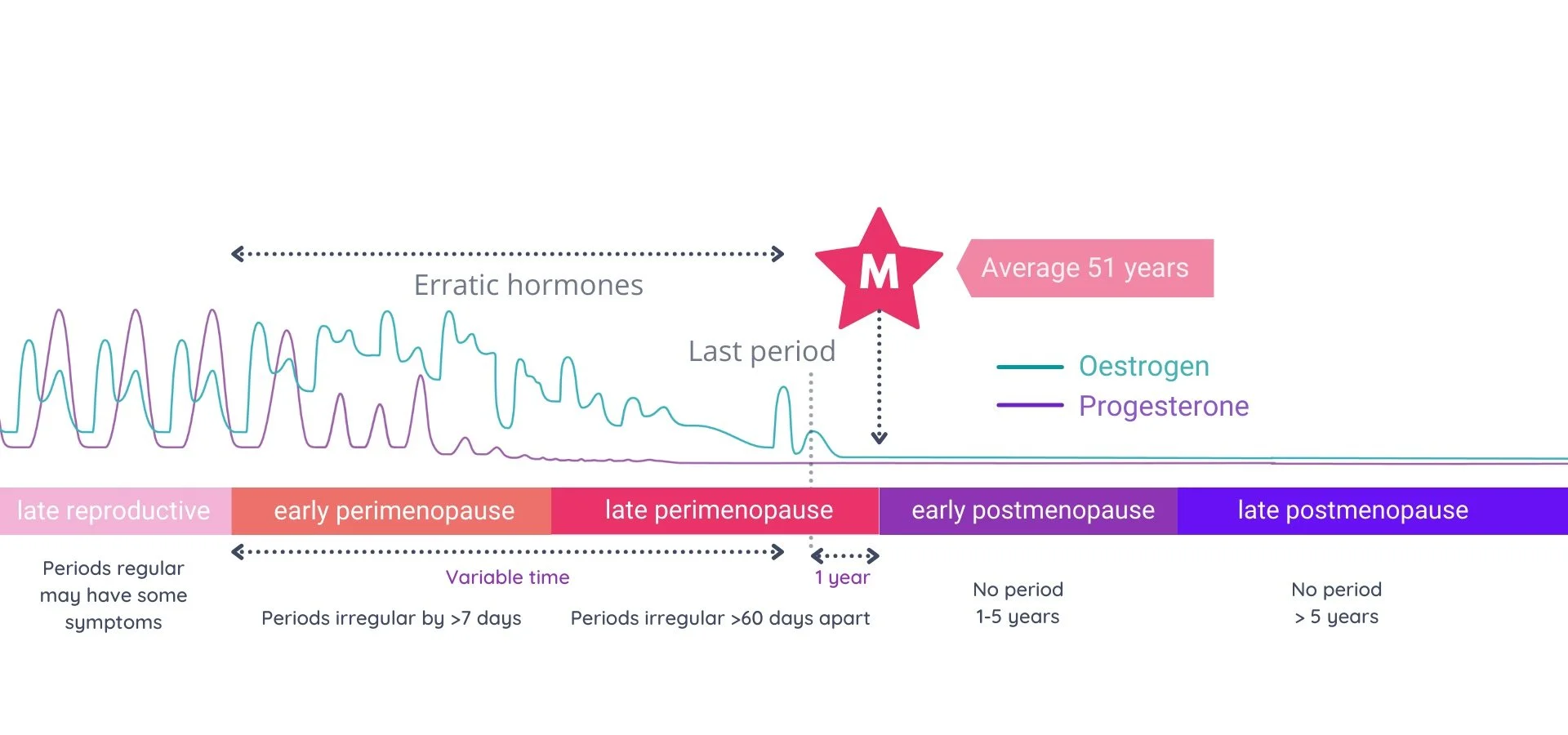
In this stage, progesterone (produced after ovulation, governing sleep quality, mood stability and how we feel in the second half of our cycle) starts to become less consistent. Oestrogen begins its gradual early decline. And FSH (follicle-stimulating hormone) quietly starts to rise, a signal that the ovaries are beginning to work a little harder than they used to.
Your cycle can look completely normal on the outside whilst all of this is happening internally (which is part of why it's so disorienting when you start to feel the effects). The PMS that's suddenly worse, the anxiety that creeps in the week before your period, the broken sleep, the low mood that isn't quite you; these aren't signs that something is wrong. They're hormonal, and they're actually completely expected at this stage, even if nobody warned us.
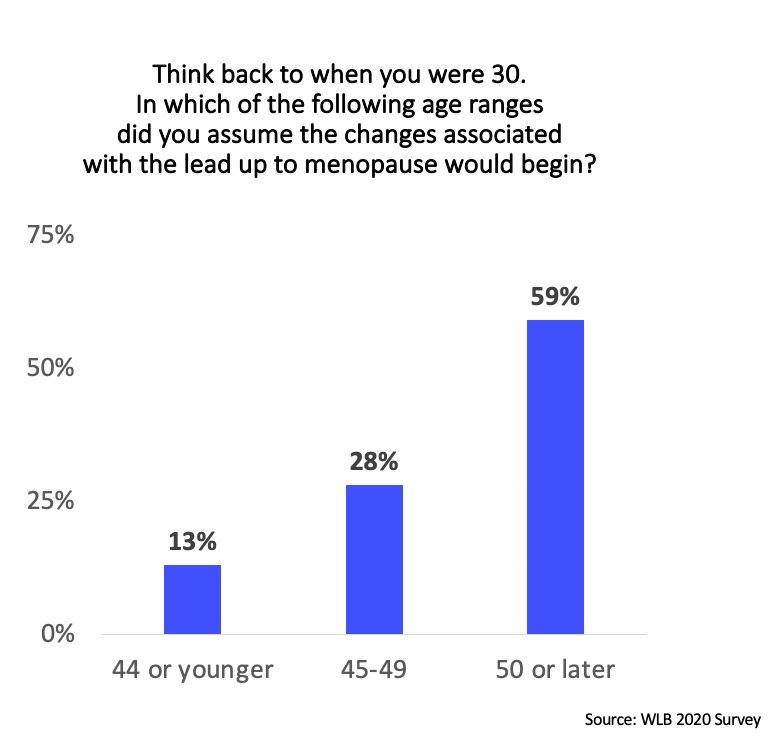
A survey of nearly 1,500 women found that 59% expected hormonal changes to begin at 50 or later, yet many were experiencing them a decade or more earlier, in regular cycles, with no framework to make sense of it. That gap feels worth closing.
Why I care about this so much as a facialist; and what it does to skin
Oestrogen is, in many ways, skin's most important ally. It stimulates collagen production, supports moisture retention, maintains barrier function and elasticity, and protects against the oxidative damage that accelerates ageing (check ‘why we age issue here’). When oestrogen is functioning well, skin tends to look and behave well too. When it starts to fluctuate, the skin notices (often before we do consciously).
According to dermatologists and scientific literature, natural collagen production begins to decline in the mid-to-late twenties, and by the age of 30, this reduction reaches roughly 1–1.5% per year. In the five years following menopause, women can lose up to 30% of their skin's collagen; a figure that slightly takes my breath away. But crucially, this process doesn't begin at menopause. It begins in these earlier years of hormonal fluctuation, quietly, incrementally, before most of us have even started thinking about it in those terms.
What this looks like in practice: skin that feels drier than it used to, less of that natural plumpness (and volume that either disappears or starts to drop), a subtly different texture, products that worked brilliantly for years suddenly feeling like they're not quite cutting it. Pigmentation can begin to appear too, particularly on areas exposed to the sun in simpler times (when baking ourselves in Ibiza, in our twenties, felt inconsequential). Skin might take longer to bounce back after a late night or a stressful week. Fine lines become a little more present. The barrier feels more reactive, read: redness, breakouts, sensitivity. In most of the cases I see in clinic, skincare or lack thereof, isn't the problem. The hormonal context underneath it has shifted, and therefore what the skin needs has genuinely changed.
What we can actually do:
This is the part I find most useful to talk about, because understanding the why is only helpful if it comes with something actionable.
Skincare needs to evolve. Your mid-to-late thirties is genuinely the moment to build your routine with more intention, for prevention. On the most basic level; a well-formulated retinoid becomes more important than ever; it supports cell turnover and collagen production when the hormonal signal for those things is starting to ease off. A good vitamin C for antioxidant protection and brightening, consistent SPF, and real focus on barrier support and hydration complete the foundations. If you've been fairly relaxed about your routine until now, this is the decade to tighten it up. Graceful #003 is a good starting point if you want to revisit the fundamentals of a good skincare routine.
In-clinic treatments start to earn their place here. As oestrogen steps back from stimulating collagen, we can encourage the skin to produce its own through targeted treatments. Microneedling (collagen induction therapy) is one I offer and one I'd highly recommend in this window. It works by creating controlled micro-injuries in the skin's surface, triggering the body's natural healing response and stimulating collagen and elastin production. Essentially, prompting the skin to behave younger. It's one of the most well-researched treatments for this hormonal skin shift, and particularly powerful when combined with targeted serums like growth factors, exosomes, hyaluronic acid or peptides; to support cell health. PRP or PRF (of which I don’t offer but Harley Street is at your disposal), which use your own growth factors to amplify the result are incredible. Gentle peels are another brilliant tool here. Not aggressive resurfacing, but considered chemical exfoliation that supports cell turnover, addresses pigmentation that often begins in this period, and keeps skin looking healthy and bright when its natural renewal is beginning to slow (my Skin Reset or Super Facial can include a custom peel). LED therapy; again one I reach for often in clinic. It supports collagen, reduces inflammation, and is now more than ever accessible to do at home.
On the body side, all of these modalities listed above translate to most of the body. Lymphatic drainage is something I'm increasingly recommending in this context; not for collagen directly, but because supporting lymphatic flow has meaningful benefits for hormonal regulation, inflammation, and that general heaviness and fluid retention that many women start to notice in this period.
For anything more invasive; skin boosters, deeper resurfacing, I'd always recommend a trusted clinician (I like to check Tweakments Guide for practitioner directory and experience) and the same principles apply: the stronger the foundations going in, the better any result will be. This is exactly why I think the tweakment pyramid approach makes so much sense here. Build the foundations now, and your options later are so much wider.
Collagen from the inside. Covered in detail in Graceful #008, but it's worth revisiting in this hormonal context. Protein intake, vitamin C, managing blood sugar and inflammation; these support the system that oestrogen is gradually stepping back from. They don't replace it, but they meaningfully slow the loss. Diet plays a large part, along with what we avoid in order to encourage further degradation.
Sleep — and why it matters more than just feeling rested. When progesterone fluctuates, sleep quality shifts, often before anything else. And poor sleep doesn't just leave us tired; it elevates cortisol, which in turn disrupts oestrogen and progesterone further, accelerates skin ageing, impairs cellular repair, and makes everything (mood, energy, skin) worse. It's one of those feedback loops that's worth breaking early. Consistent sleep and wake times, reducing light exposure in the evening, and magnesium glycinate before bed are all genuinely supported by evidence and worth exploring if sleep has started to shift. I write about sleep here.
Resistance training — for more than aesthetics. Muscle mass and bone density both rely partly on oestrogen, and both begin to be more vulnerable in this period. But strength training also directly supports hormonal balance by improving insulin sensitivity, reducing cortisol, and supporting oestrogen metabolism. Women who strength train consistently tend to experience a measurably smoother hormonal transition. Not because it stops anything, but because the body has better regulation and more resilience to draw on. It's one of the best investments we can make in this decade.
Stress and cortisol — the underrated driver. Chronic stress elevates cortisol, which suppresses progesterone production — often making the symptoms of this transition significantly worse than they need to be. Managing stress isn't soft advice; it has a direct hormonal mechanism. Whether that's boundaries, breathwork, movement, sleep, or simply doing less; it matters here in a physiological sense, not just an emotional one.
The conversation with a good GP. Awareness of this in-between stage is improving, but inconsistently. Some practitioners are brilliant, others still default to 'everything looks normal on your bloods' when you're clearly not feeling it. If something feels off, you're allowed to push, and you don't need to be in the depths of perimenopause to ask questions about hormonal health and management. Tracking your symptoms before those conversations makes them so much more productive; apps and wearables are excellent for building that picture over time. If you want to go a step further, at-home hormone testing has become much more accessible. I tried Hertility a few years ago and found it really useful; it's reasonably priced, tests for a broad range of hormonal markers, and gave me a clearer sense of where I actually was on the trajectory rather than just guessing. Knowing your numbers going into a GP conversation changes it entirely.
So many of the women I see (myself included) are guilty of being incredibly hard on ourselves for changes that are completely explainable, attributing them to stress, or not trying hard enough or doing enough, or simply getting older, as if that's an answer. It isn't, really. Our bodies are doing exactly what bodies do; just earlier than anyone thought to mention to us. Consider this your heads up.
If you're in your mid-to-late thirties and something feels different; you're not imagining it, you're not falling apart, and you're certainly not alone.
From My Desk This Week:
One product I'm loving: I've been using the Westman Atelier blush for a few months and I'm genuinely converted. Cream blush, beautiful range of colours, easy to apply, and (importantly) the ingredients are actually good for your skin. My mum has always said that after 30, cream-based makeup is the way to go: powder can settle into the skin in a way that doesn't flatter, whereas a sweep of creamy colour on the cheeks is one of the simplest, most effective ways to look a little fresher and more awake. She was right, as mothers tend to be.
What I'm reading/listening to: A few issues ago I asked for your thoughts on whether diving into A Court of Thorns and Roses by Sarah J. Maas was a good idea. The feedback was mixed, I went for it anyway, and I am now deeply, unashamedly invested. The writing will unlikely be winning any Pulitzer Prizes, but the storyline is perfect escapism and I am on book four with no signs of stopping. Highly recommend if you need something that demands absolutely nothing of you intellectually and everything of you emotionally.
In the media: Less media, more listen but I've been listening to The Wellness Scoop with Ella Mills and Rhiannon Lambert a lot lately; it's become a reliable Monday morning listen. Their episode on reversing inflammation covered a study showing that switching to a traditional, whole-food diet for just two weeks produced measurable reductions in inflammation and improvements in immunity. No supplements, no complex protocols, just simpler, more seasonal eating. In the context of everything we've talked about this issue, it felt very relevant. There's also a 2025 meta-analysis that echoes the same finding across 33 trials: that whole-food, anti-inflammatory dietary patterns consistently reduce key inflammatory markers. The evidence is stacking up quietly, and I don't think it's going anywhere.
Small shift to try this week: Download a cycle tracking app; Clue is a good starting point. And just start noting how you feel across the month: energy, skin, mood, sleep. No action required yet, just data. If anything from this issue resonated, that information will make it feel far more personal and useful, and it's the single most helpful thing you can bring to any conversation about your hormonal health should you need to in the future.
As always, I hope this helps us all navigate some popularised topics around ageing with intention and ease. I’d love to hear your questions or any topics you’d like me to break down in future newsletters, just reply to this email.
With grace,
Charlie x
PS: Please forward this email on to anyone you think might find it insightful. They can sign up here, and read past issues here.