Graceful #029 - The Jaw Issue
Stress, the Jaw, and How it Impacts How we Age
Stress gets a mention in most wellness conversations, but often as a vague footnote. Reduce stress, sleep more, drink water etc. Rarely does it get the specific, clinical attention it deserves as one of the more significant drivers of how we age. And one of the most overlooked places chronic stress shows up (and stays) is the jaw.
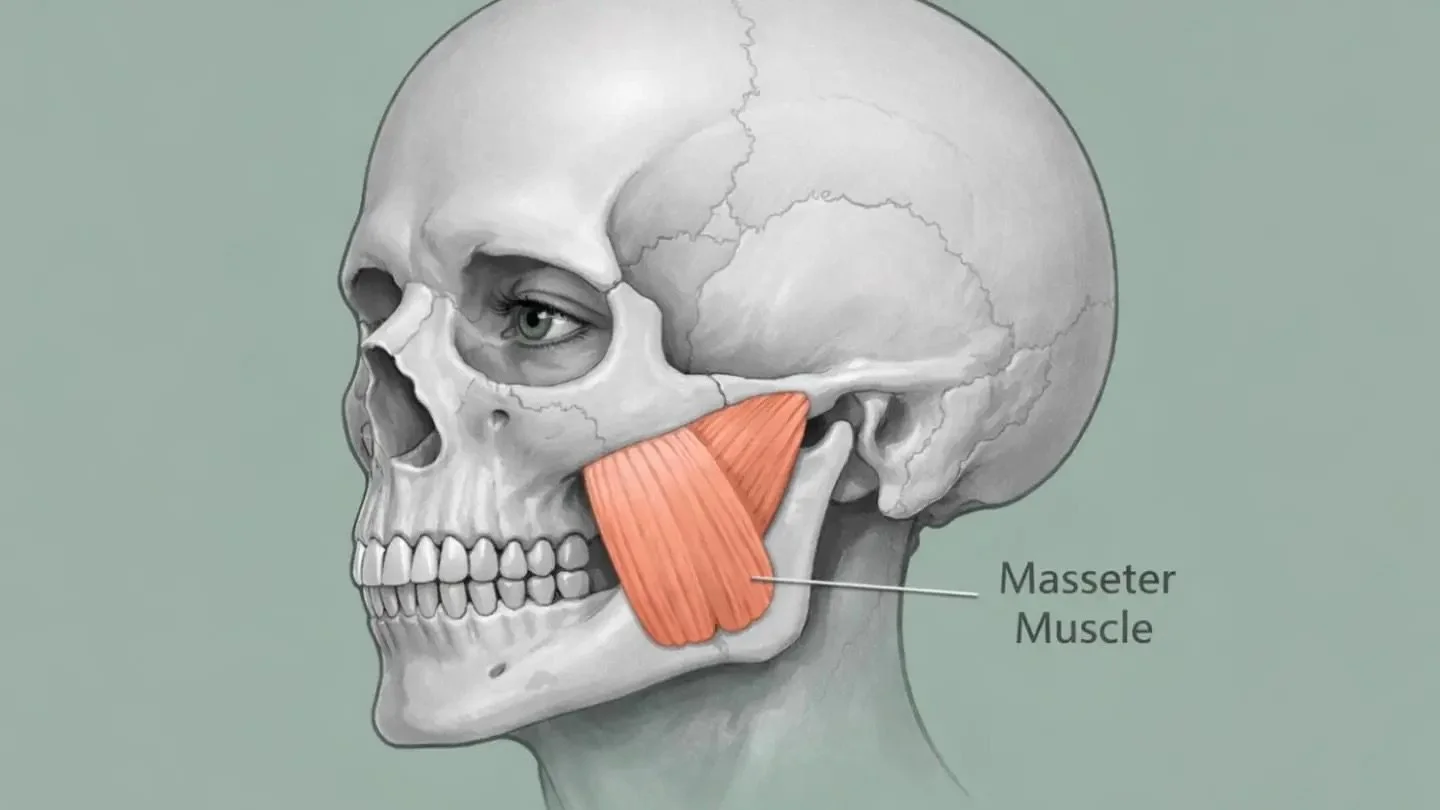
I see this constantly in clinic. Most of the women I work with are holding a significant amount of tension there, often without realising quite how much (but those that do realise, really do). Busy lives, high mental load, constant stimulation; and over time, that bracing of the jaw becomes their new normal. The masseter (the muscle responsible for chewing, clenching, and grinding) is one of the strongest muscles in the body relative to its size, and in my experience one of the most chronically overworked. Dentists will spot it in worn enamel or wearing down of the molars. I can see it in the density of the tissue when I'm working in the jaw area almost instantly, and how mobile the surrounding tissue and skin feels.
What's Actually Happening:
When we're under sustained stress (the kind that doesn't resolve over a few days) the body stays in a sympathetic (fight-or-flight) state for longer than it's designed to. The jaw is one of the first places this registers (but not just there as many of you probably know so well); the neck stiffens, the shoulders creep up, and the whole upper body becomes part of the same holding pattern. It's a chain reaction, and worth understanding as one, because facial tension isn't the root issue, it's just where the stress is showing up.
The downstream effects on how we’re ageing are very real too. Chronic sympathetic activation keeps cortisol high, and as I've written about before, high cortisol sustained over time directly impacts collagen production, accelerates inflammaging, and compromises the skin barrier (think dry, irritated, red). This is the biological basis of "cortisol face": so it’s not a dramatic change, but a gradual dimming that compounds over time; less elasticity, less plumpness in the skin, and a dull complexion that even a great at home routine won't fully address, because the issue is upstream of the skin.
It’s More Common in Women:
Something that might shock you: the jaw and the pelvic floor are structurally connected through a continuous line of connective tissue (the deep front fascial line) that run from the jaw, through the throat, chest, and diaphragm, all the way down to the pelvic floor. So when chronic jaw tension travels down that line, often the pelvic floor responds in the same way: it tightens. Good pelvic physios know this (I’ve had an amazing chat to one of my clients who happens to be a pelvic floor physio, about the connection between jaw tension and urinary incontinence) which is why jaw release often comes up in that context. It’s often why women experience changes in their teeth during or after pregnancy.
It's also sadly part of why women carry disproportionately more stress-related jaw tension than men. Research consistently shows higher rates of TMJ disorders and bruxism in women, driven by hormonal factors and the particular ‘shape’ of female stress: the mental load, the background processing, the difficulty genuinely switching off, family life and the list goes on. The jaw, the neck, the pelvic floor, for a lot of us; are all holding the same thing (our lives by a thread).
What To Do About It:
The vagus nerve is the primary pathway of our parasympathetic (rest-and-digest) system, and it runs alongside the structures of the face, jaw, and throat. Chronic jaw tension keeps it on a low-level alert; so our nervous system never fully downshifts.
A relaxed jaw is one of the fastest signals of safety the nervous system recognises. Pair it with slow diaphragmatic breathing (breath that reaches the belly rather than sitting in the chest) and the effect compounds again: the diaphragm drops, the pelvic floor follows, and the whole system can move towards recovery rather than a survival state. This is the actual mechanism behind why breathwork helps, it's directly interrupting the stress-tension cycle at a physiological level (essentially telling our body we can calm down). I like open app for this.
At Home Support:
Awareness is a big chunk of the work. Check in with your jaw a few times a day, set a calendar reminder (literally); are your teeth touching or clenching? Notice the neck and shoulders too, do they need to creep back down? If yes: set your teeth apart rather than touching, make your tongue heavy and sitting low in the mouth, and take one slow breath into the belly. Repeat.
External jaw massage helps too; fingertips on the masseter (you can feel it contract by placing your fingers on your jawline just in front of your ear and biting down), and massage using slow circular pressure. I post about self-massage on my socials. But the tissue that holds the most chronic tension tends to sit deeper: the muscles inside the mouth: the buccinators, the pterygoids, which never normally receive any direct attention.
Buccal Massage:
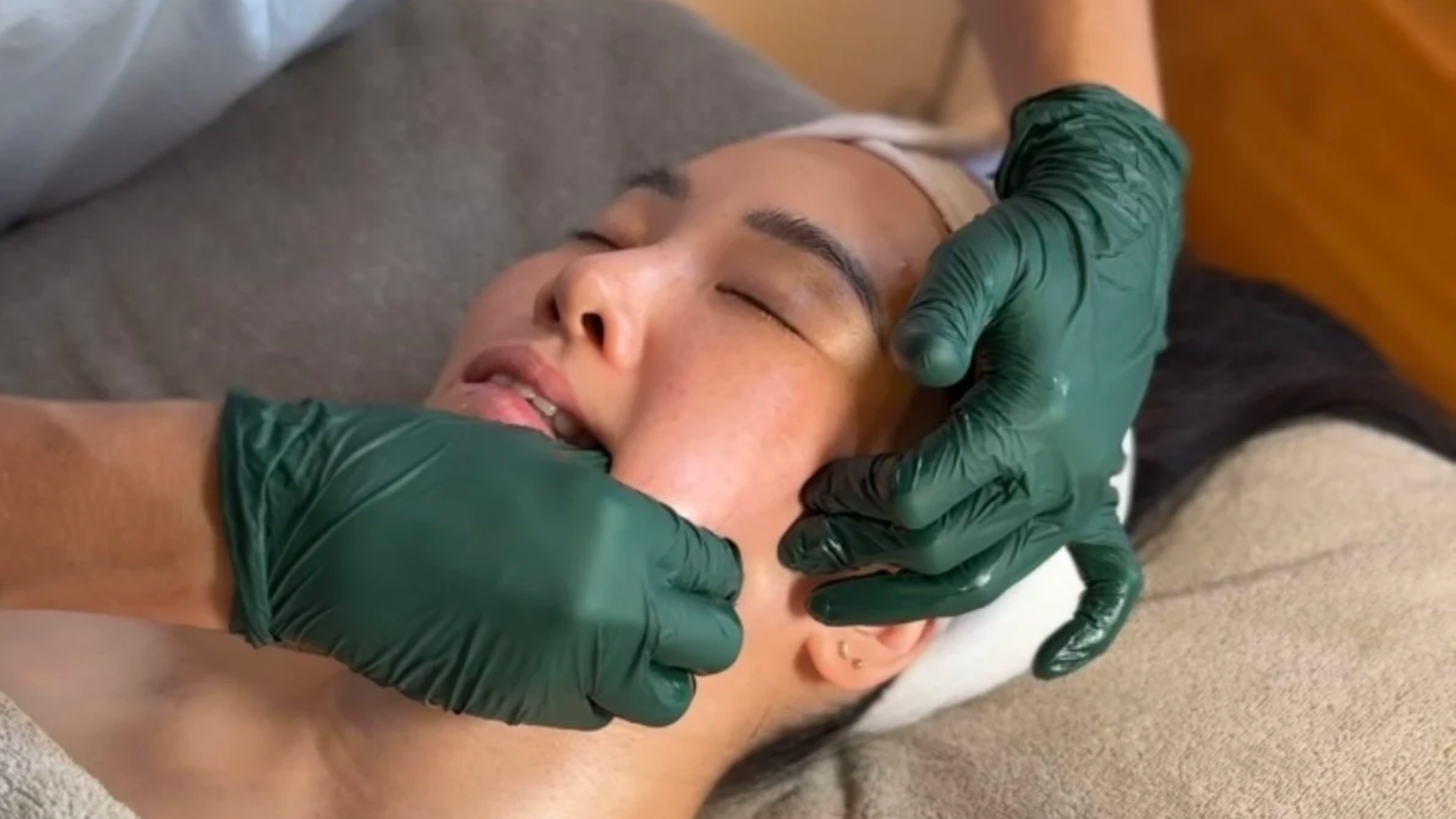
This is exactly why buccal massage produces the results it does, and why it's become one of the most requested treatments in my clinic. Working internally gives access to tissue that external massage just can't reach. The result is both something you’ll see and feel; less tension through the jaw, a softer and more open face, and a nervous system that's had a chance to wind down. Chronic gripping in the jaw also contributes to the heaviness and compression in the lower face that we associate with ageing; releasing it is both a structural and a nervous system intervention. So we can call it cosmetic or call it wellness; but it’s really both
For anyone thinking about ageing in a more intentional way, I think we have to look beneath the surface, beyond skincare, and injectables and remember there are layers of tissue and muscles there impacting the structure of our face. And one step further back again, at how we're managing stress day to day. In this case, how we look and how we feel really do go hand in hand.
From My Desk This Week:
One product I'm loving: I was recently sent the new Current Body LED face mask after using a different brand for the last few years and wow what an upgrade. It actually cups under the chin and along the lower face, so you get a much better fit (and coverage where it’s often missed). It also comes with built-in eye shields, so the light doesn’t creep in, meaning you can properly relax or get on with things while using it. I’ve just brought LED back into my routine after a month off, and I forgot how much of a difference it makes. If you’re on the fence, they gave me a code for 10% off (PERRYCB) and I wrote all about LED benefits here.
What I'm reading/listening to: I’m still very on a mission to read more fiction in a bid for a swifter wind-down in the evening. Next on my list is Flesh by David Szalay which to my understanding is about what drives a life: what makes it worth living, and what we contend with. I’m excited to dive in, and change gear after being in a Sarah J. Maas hole for a while! As always, recommendations welcome!
In the media: The Jo Malone case has been everywhere this week, and I keep going back and forth on it. On one hand, there’s something that feels instinctively uncomfortable about someone not being able to use their own name, especially when that name is so tied to what they built. But at the same time, she did sell her brand (and the rights that came with it), and these agreements are usually very clear, even if they feel restrictive years later. I’m following with interest!
Small shift to try this week: A few times today, check in. Jaw, neck, shoulders; is anything held or tight that doesn't need to be? Teeth apart, tongue relaxed, one slow breath into the belly. That's the starting point, and for most people it's more revealing than expected!
As always, I hope this helps us all navigate some popularised topics around ageing with intention and ease. I’d love to hear your questions or any topics you’d like me to break down in future newsletters, just reply to this email.
With grace,
Charlie x
PS: Please forward this email on to anyone you think might find it insightful. They can sign up here, and read past issues here.
*For any studies or references to support this newsletter please reach out.